Order Trichoptera
Family Leptoceridae
Genus Mystacides
Species sepulchralis

Pronounced - mis tuh sides - seh pull chra lis
Common Name - Black Dancer
Size
Hook - 18, 20
Millimeter - 9 to 10
Type - Tube case maker
Case Type - Tube case consisting of debris, plant matter, grains of sand, and stone. Unlike Apatania, M. sepulchralis has learned how not to be consumed case and all by foraging trout. They construct a stone tube like case attached to long twigs, leaf steams, and other long pieces of plant material, making it a more difficult to swallow meal.
Adult
Body Color - Male abdomen very dark gray almost black, thorax black. Female abdomen pale grayish green, or pale grayish minty green, thorax black.
Wing Color - Gun barrel black, or metallic black.
Did someone say super hatch? This little devil must have been the original! If you've never encountered Mystacides sepulchralis you've never fished the upper Delaware system in June or July. These little creatures are real hard to miss, their the most in your face aquatic insect you'll ever find. During sunny afternoons, along the slower pools large swarms dance and flutter near the banks. Never flying to far away from the rivers edge, staying about the same height as the bank, and never flying over any fast water.
Swarms made up of hundreds if not thousands of these small black caddis will actually follow fisherman along the rivers edge especially if they're in a boat of some other floatation device. This is a result of the way they fly along the river bank, they seem to mistake a slow moving object for the river bank and begin following it as it moves.
These will avoid fast water at all costs. While collecting these specimens I would walk upstream along the rivers edge in the slow pools. M. sepulchralis would stay just out of reach flying upstream ahead of me until they would reach some faster moving water then dart around me and head back down to the slow water.
Even though M. sepulchralis is very abundant trout will ignore them most of the time. For the simple fact that they prefer the warm sunny mid afternoon when most trout are hunkered down. Small trout will at times rocket out of the water in an effort to pick off the low flying caddis. Later in the afternoon as the shadows move out over the water from the bank larger trout will begin to notice, taking their opportunity to sip in the few adults that become trapped in the surface film during these swarms.
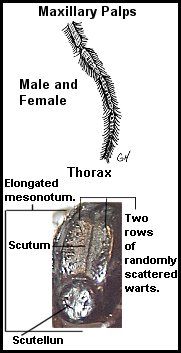
Key to Family - Ocelli absent. Mesonotum elongated, scutum contains two long rows of randomly scattered warts. Legs have a good number of small black spines, spurs foreleg 0, middle 2, hind 2, or foreleg 1, middle 2, hind 2. Antennae two to three times longer than body length. Male and female maxillary palps five segmented, and covered with thick bristle like hair.
Key to Genus - Spurs foreleg 0, middle 2, hind 2.
Key to Species - M. sepulchralis - Male, ventral apical U shaped posterior extension. Modified from, Moulton and Johnson - 1996 - Interior Highlands Trichoptera Memoirs of the American Entomological Institute 56.
Jerry Hadden's Guide Service
Fly fishing float trips for wild trout on the Upper Delaware River.
607-221-4282